—Insights—What Is a Flexible Feeder and How Does It Work?
Scroll
Originally posted on: June 23, 2026
What Is a Flexible Feeder and How Does It Work?
A flexible feeder is an advanced automatic feeding system designed to present, orient, and deliver component parts to automated assembly, inspection, or packaging processes — without the need for dedicated mechanical tooling for each part type. Unlike traditional bowl feeders, which are engineered for a single part geometry, a flexible feeder handles a wide variety of components: different shapes, sizes, materials, and orientations, all on the same system.
For manufacturers navigating high-mix, low-volume production, frequent product changeovers, or evolving part designs, the flexible feeder has become an essential automation tool. This article explains exactly what a flexible feeder is, how it works step-by-step, what it is used for, and how it compares to traditional feeding alternatives.
What Is a Flexible Feeder?
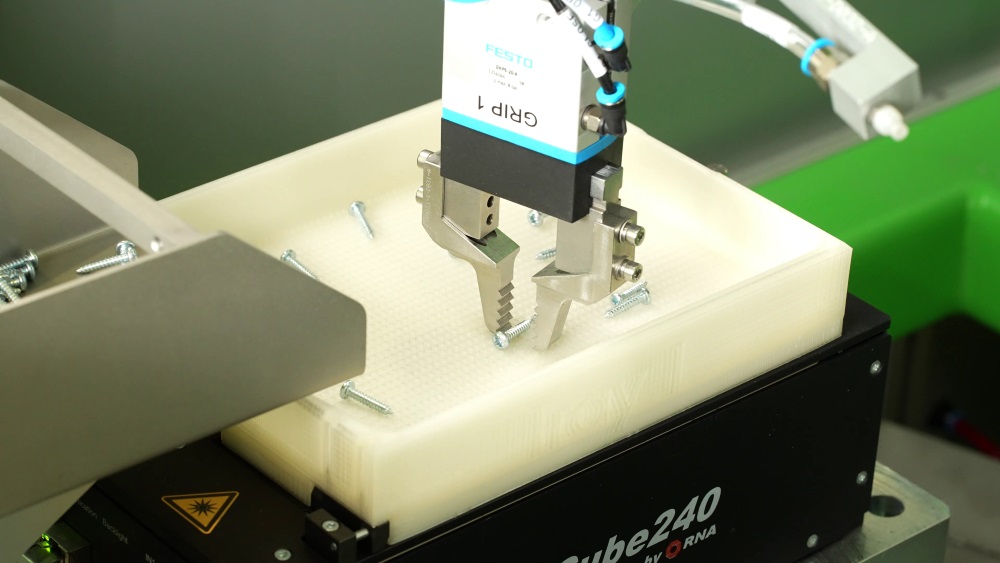
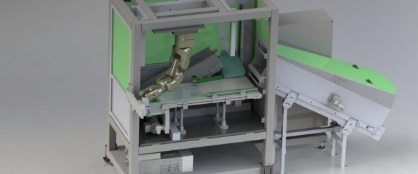
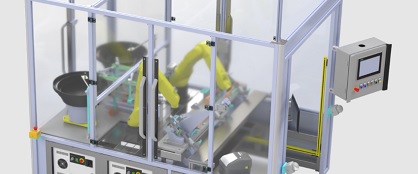
A flexible feeder — also referred to as a flexible feeding system, flexible part feeder, or vision-guided feeder — is an automated solution that combines three core technologies: a vibratory or platform-based feeder, an industrial vision system, and a robotic arm. Together, these components identify and pick randomly presented parts and transfer them accurately into the next stage of production.
The defining characteristic is adaptability. A single flexible feeder can be reprogrammed — typically in minutes — to handle entirely different components, making it the go-to solution for production environments where part variety or changeover frequency makes dedicated feeders impractical or too costly.
Definition
A flexible feeder is an intelligent, automatic feeding system that presents and orients bulk components for automated assembly or packaging without requiring part-specific mechanical tooling. It adapts to multiple part types through software — not hardware — changeover.
How Does a Flexible Feeder Work?
A flexible feeding system operates through a continuous, automated cycle. The four stages below describe the standard process:
Step
Stage
What Happens
01
Bulk Part Loading & 3-Axis Vibration
Bulk parts are loaded into a hopper. They are dispensed onto a vibration platform or conveyor belt, which agitates and spreads them into a randomised but visible layout across the feed deck. The feeder continuously monitors part density and releases more components from the hopper to maintain optimal pick availability.
02
Vision System Integration
An industrial camera — paired with AI or image-processing software — scans the feed deck and detects the position, orientation, and identity of each part. The vision system identifies which parts are in a pickable position (not overlapping, not obscured) and passes precise coordinate data to the robot controller. Parts facing the wrong way are re-vibrated until correctly oriented.
03
Robotic Pick and Place
A robotic arm — typically a SCARA or 6-axis robot fitted with a suction or mechanical gripper — receives the coordinates from the vision system and picks the correctly oriented part. The robot places it accurately into the next process: assembly jig, packaging line, inspection station, or machine input.
04
Intelligent Control System
An integrated software platform manages the full cycle: vibration patterns, vision processing, robot motion, and part-handling rules. The control system dynamically adjusts feeder behaviour based on real-time production requirements. Changeover to a new part type is executed through a software selection — no mechanical retooling required.
Key Components of a Flexible Feeding System
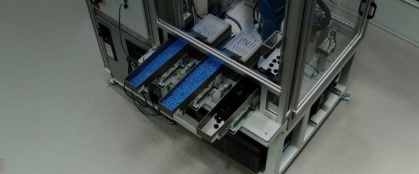
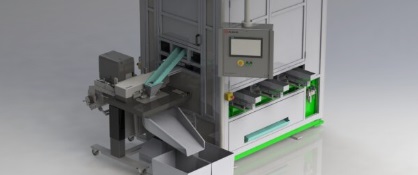
RNA’s flexible feeders are compact, modular systems. A complete flexible feeding solution comprises:
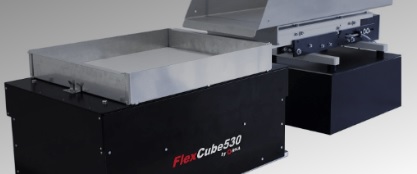
Feeder / Vibration Platform
The mechanical base of the system. Controlled vibration separates and spreads bulk parts across the feed deck. Feeder size is matched to part dimensions — typically the longest part dimension should be 1/25th to 1/5th of the feeder width to allow enough candidates per dispensing cycle.
Industrial Vision System
A camera and lighting assembly, paired with image-processing software, analyses part position and orientation in under one second. Vision is the intelligence layer that replaces mechanical orientation tooling.
Robotic Arm
SCARA robots (e.g. Denso, Epson, Fanuc, Omron) deliver fastest cycle times for flat-plane picking. 6-axis robots (e.g. ABB, KUKA, Universal Robots) are required when parts must be picked or placed at angles other than parallel to the feed deck.
End of Arm Tooling (EOAT)
Suction grippers or mechanical grippers, selected and optimised per part geometry and material. Changeover of EOAT is rapid and does not require significant downtime.
Hopper / Bulk Storage
Stores the bulk parts supply and feeds the vibration platform automatically, maintaining a consistent part density on the feed deck without manual intervention.
Control Software
Integrates vision data, robot motion, and feeder vibration in a single interface. Product changeover is performed via software selection. RNA systems include user-friendly interfaces for straightforward operator configuration.
Flexible feeders are compatible with a wide range of component types. RNA’s systems handle parts of any shape, size, and geometry — including complex geometries and delicate materials.
Materials:
• Metal
• Plastic and polymer components
• Rubber and silicone parts (a common limitation for bowl feeders)
• Glass and ceramic components
• Delicate or fragile parts requiring careful handling
Part characteristics best suited to flexible feeding:
• Small-to-medium parts with consistent geometry
• Components with clear visual contrast against the feed deck background
• Parts with defined, stable resting orientations
• Components where the design may change or evolve (eliminating future retooling costs)
Note:
Parts that tend to clump, tangle, or overlap excessively may require feeder deck structuring or textured surface treatment to achieve reliable pick rates. Performance depends on factors such as part size, shape, weight, surface finish, material properties.
RNA can advise on part suitability prior to system specification. A feasibility assessment is often the best way to determine suitability.
Flexible Feeder vs. Vibratory Bowl Feeder: Which Do You Need?
Both technologies play an important role in automation, but each suits different production needs.
Factor
Flexible Feeder
Bowl Feeder
Changeover Time
Minutes — software-based selection
Hours — mechanical retooling required
Part Variety
Handles multiple part types on one system
Dedicated to a single part geometry
Tooling
No part-specific tooling
Bespoke tooling per part
Best For
High-mix, multi-SKU, frequent changeover
High-volume, single-part, rare changeover
Floor Space
Compact, modular footprint
Part-specific, often larger setups needed
Future-Proofing
Adaptable to part design changes via software
New tooling required for each design change
Throughput (typical max)
Up to ~45 parts per minute (single robot)
Higher for single-part dedicated lines
At RNA, we help customers determine the best feeding technology based on part geometry, throughput requirements, and long-term production goals.
Key Advantages for High-Mix, Low-Volume Manufacturing
Compatible with a Wide Variety of Parts
RNA flexible feeders handle parts of any shape, size, and geometry — including complex geometries and delicate materials — eliminating the need for multiple dedicated feeding systems.
Rapid and Easy Changeover
Part changeover is executed through the user-friendly software interface, with only a quick change of end-of-arm tooling required. Software-based product changeovers take minutes, not hours.
Precise Part Detection
Integrated vision guidance delivers reliable and accurate part detection, communicating exact pick coordinates to the robot in real time.
Simple to Integrate
RNA flexible feeders are designed to integrate directly into assembly lines, stand-alone machines, and as upgrades to existing equipment — across any industry.
Easy Reconfiguration
The system can be reconfigured to accommodate production changes without mechanical redesign, protecting your capital investment as product ranges evolve.
Applications in Manufacturing
Flexible feeders are deployed across a broad range of industries and process types:
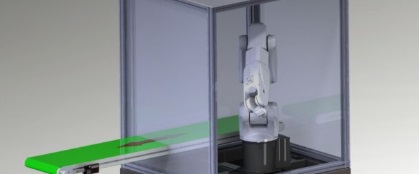
Robotic machine tending automation system. Automates loading and unloading of CNC machines, injection moulding machines, and similar capital equipment.
Semi-automated and fully automated clipping machines. Specialist solution for robotic clipping applications, including automotive arm rests and soft-goods assembly.
Future Trends in Flexible Feeding
The flexible feeder market continues to evolve rapidly. Key developments shaping the next generation of systems include:
AI & Machine Learning Integration: Improved pattern recognition, self-adjusting vibration parameters, and predictive maintenance capabilities that reduce total cost of ownership.
Collaborative Robotics (Cobots): Flexible feeders paired with cobots for easier deployment in smaller manufacturing setups and human-robot collaboration environments.
Cloud-Based Monitoring & Digital Solutions: Real-time data, remote diagnostics, and predictive maintenance via cloud-connected systems.
Modular, Plug-and-Play Designs: Systems engineered to reduce integration time and total cost, enabling faster deployment across multiple lines or facilities.
Flexible Feeders FAQs
What is the difference between a flexible feeder and a bowl feeder?
A bowl feeder is purpose-built for one part type and requires mechanical retooling for any change. A flexible feeder uses vision and robotics to handle multiple part types through software changeover — typically in minutes. Bowl feeders are more efficient for very high-volume, single-part runs; flexible feeders are superior for high-mix, multi-SKU, or frequently changing production.
What throughput can I expect from a flexible feeder?
Throughput depends on part size, geometry, and robot type. A single-robot flexible feeding system can typically achieve up to approximately 45 parts per minute (1.5-second pick-and-place cycle time). Higher throughput applications may deploy dual feeders and dual robots at a single pick station.
How long does changeover take?
Software-based product changeover can be completed in minutes. If end-of-arm tooling also requires changing, total changeover time remains significantly shorter than mechanical retooling of a traditional feeder.
Can flexible feeders handle delicate or fragile parts?
Yes. RNA flexible feeders can be configured with appropriate gripper types and vibration settings to handle delicate components gently.
What types of robot work best with flexible feeders?
SCARA robots deliver the fastest cycle times for flat-plane pick-and-place. 6-axis robots are required where parts must be picked or placed at angles other than parallel to the feed deck. The choice depends on part geometry, placement requirements, and cycle time targets.
📩 Ready to Explore Flexible Feeders for Your Production Line?
RNA’s engineering team can assess your parts, recommend the right FlexType™ system, and demonstrate capability with your specific components. Standard and custom flexible feeding solutions available. Contact us today to discuss the right flexible feeding solution for your component parts, feed rates, and production environment.
📞 Or call us on +44 (0)121 749 2566
Get exciting news and updates in the future. See our Privacy Policy to learn how we protect your information.
We use cookies to give you the best experience on our site. By using our site you accept our Privacy policy. Accept
Manage consent
Privacy Overview
This website uses cookies to improve your experience while you navigate through the website. Out of these, the cookies that are categorized as necessary are stored on your browser as they are essential for the working of basic functionalities of the website. We also use third-party cookies that help us analyze and understand how you use this website. These cookies will be stored in your browser only with your consent. You also have the option to opt-out of these cookies. But opting out of some of these cookies may affect your browsing experience.