—Insights—Flexible Feeding Systems in Automation: How They Work and Their Benefits
Scroll
Originally posted on: February 13, 2025
Flexible Feeding Systems in Automation: How They Work and Their Benefits
Author: Mathew Hallifax
Flexible feeding systems combine programmable vibration, machine vision and robotic handling to automatically present, identify and pick component parts for assembly, inspection or packaging. Unlike vibratory bowl feeding systems designed around a specific component part, flexible feeders can accommodate different part geometries and product variants with minimal mechanical changeover. This makes them particularly suitable for high-mix, low-volume manufacturing, where frequent product changes and part flexibility are essential.
This guide covers where flexible feeders are used in automation, the benefits they offer, and how to decide whether one fits your line.
A flexible feeding system typically combines a vibration platform, an industrial vision system and a robot. The cycle has four stages:
1. Part Loading
Parts are dispensed from a hopper or conveyor onto a vibration platform. Programmable vibration distributes the parts across the surface, separating overlapping parts and presenting them in positions suitable for vision detection and robotic picking.
RNA’s FlexCube™ technology uses intelligent three-axis vibration to move parts in different directions, improving part distribution and presentation.
Loading Parts onto a Conveyor Belt
Loading Parts onto a Vibration Platform
2. Vision detection
An integrated machine vision system uses industrial cameras with AI or image-processing software to identify the position and orientation of each part on the platform, providing the information required for robotic picking. Parts that are not correctly presented are vibrated or flipped to reorient them.
Depending on the application, the system can also incorporate additional inspection or identification functions.
Detecting Part Position
Quality Control Vision System
3. Robotic pick and place
The robot, fitted with an application-specific gripper, picks the correctly oriented parts and places them into the next process, such as assembly, inspection, or packaging.
This vision-guided pick-and-place process reduces the need for dedicated mechanical orientation tracks.
Robotic Arm Equipped with Gripper
Pick and Place Robot
4. Intelligent Control
The system coordinates feeding, vibration, vision detection and robotic movements through integrated control software.
Different part types can be managed using stored feeding parameters, vision configurations and robot programs.
For suitable applications, product changeovers can be completed primarily through software adjustments, with limited mechanical changes.
Key Benefits of Flexible Feeding Systems
Versatility
One system can handle a wide range of parts, from small electronic parts to larger mechanical pieces. This versatility eliminates the need for multiple dedicated feeding systems, reducing costs and saving floor space.
Quick Changeover
Traditional feeding systems may require mechanical tooling adjustments when switching between parts. Flexible feeding systems can switch between part types in minutes, significantly reducing downtime and increasing production efficiency; Ideal for manufacturing environments with frequent product changes.
Accuracy
With advanced vision systems and robotic integration, flexible feeders enable precise and repeatable part picking and placement. This reduces errors and improves the overall quality of the final product.
Cost-Efficient for High-Mix Production
For industries producing multiple product types in smaller batches, investing in dedicated feeding solutions for each product is not cost-effective. A flexible feeder provides a single solution that can be used for multiple products, significantly reducing equipment costs and maintenance expenses.
Applications of Flexible Feeding Systems
Flexible feeding systems are used across manufacturing industries where part variation, precision handling and production flexibility are important.
Handling small screws, connectors, contacts, chips and other small electronic parts.
Consumer goods
Assembly of toys, home appliances, or packaging solutions.
Plastics
Feeding molded parts with different geometries and orientation requirements.
Flexible Feeding Solutions from RNA Automation
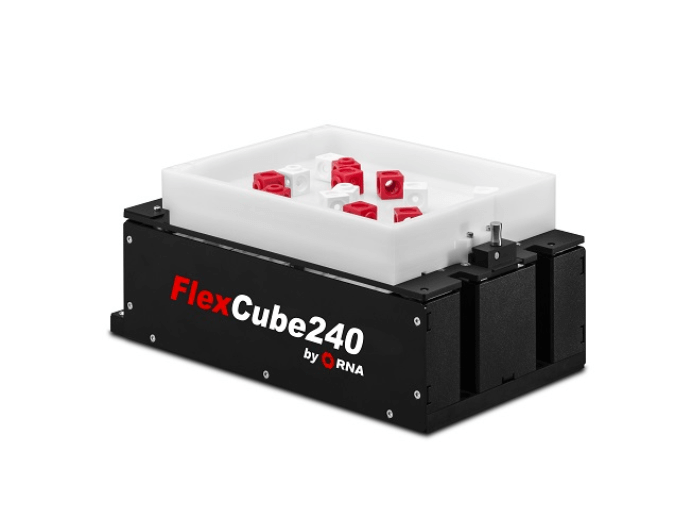
FlexCube™
Intelligent three-axis vibration platforms for flexible part distribution and pre-orientation
FlexType™ P
A standardized platform combining flexible feeding, machine vision and robotic handling.
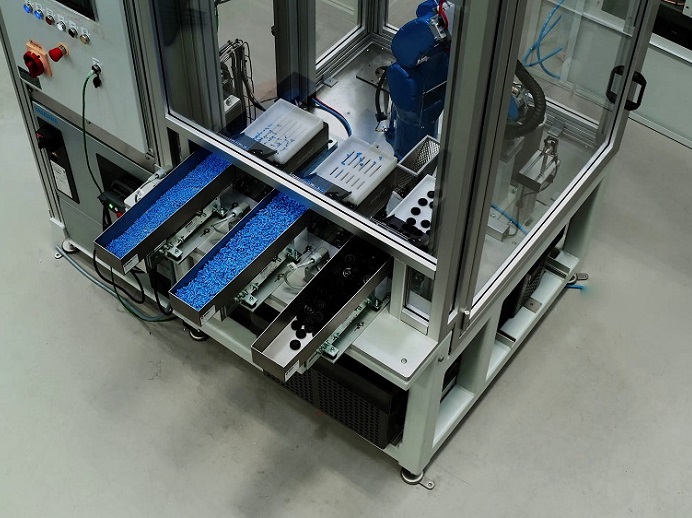
FlexType™ P Assembly
A standardized, flexible automated feeding and precision parts assembly platform.
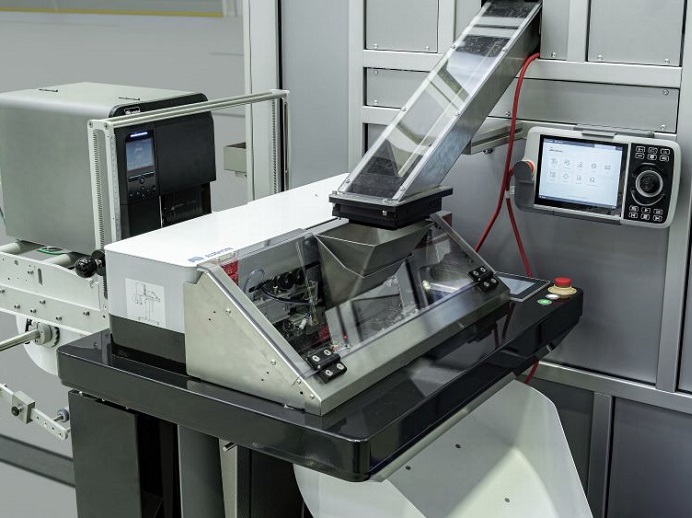
FlexType™ P Pack
Flexible feeding and robotic handling integrated with automatic bagging equipment.
FlexType™ R
Robotic handling solutions for automated manufacturing applications.
FlexType™ Clip
Semi-automated and Fully automated Clipping Machines
FlexType™ VT
Robotic Machine Tending Automation System
By combining feeding technology, machine vision and robotics, RNA develops solutions around individual part-handling and production requirements.
Is a Flexible Feeding System Right for Your Line?
A flexible feeder is typically worth considering when:
• you run many part variants or small batches;
• product designs change often;
• changeover downtime limits output;
• you are automating assembly, inspection or packaging and need to avoid per-part tooling.
How to Choose the Right Flexible Feeding System
Selecting a flexible feeder requires consideration of several engineering factors:
Part Geometry: Size, shape, material and presentation characteristics.
Production Requirements: Target pick rate, cycle time and required output.
Product Variants: Number of parts and expected changeover frequency.
Vision Requirements: Part recognition, orientation detection and inspection needs.
Robotic Handling: Gripper design, robot reach, payload and placement accuracy.
System Integration: Compatibility with downstream assembly, inspection or packaging equipment.
Part trials and engineering assessment can help determine whether flexible feeding offers the most appropriate solution.
FAQs
What is a flexible feeding system?
A flexible feeding system uses programmable part presentation, machine vision and robotic handling to identify, pick and transfer parts for automated assembly, inspection or packaging. It can accommodate different component part types with fewer mechanical changes than dedicated feeding systems.
How does a flexible feeder work?
A flexible feeder uses controlled vibration to distribute and separate parts on a feeding surface. A machine vision system identifies suitable parts and their positions, allowing a robot to pick and transfer them to the next production stage.
What types of parts can flexible feeders handle?
Flexible feeders can handle a wide range of parts, including plastic moldings, metal parts, electronic parts and precision medical-device parts. Suitability depends on part size, geometry, material, surface characteristics and the required production rate.
Are flexible feeding systems suitable for high-speed production?
Flexible feeding systems can support high-speed automation, but achievable throughput depends on part presentation, vision processing, robot cycle time and the number of picking units. For dedicated, very high-volume applications, conventional feeding systems may offer advantages.
What are the main advantages of flexible feeders?
The main advantages include handling multiple part variants, faster product changeovers, reduced reliance on dedicated orientation tooling and integration with machine vision and robotics. These benefits are particularly valuable in high-mix manufacturing environments.
📩 Discuss Your Flexible Feeding Requirements
If your production process involves frequent product changeovers, multiple part variants or complex part-handling requirements, a flexible feeding system may provide a practical alternative to dedicated mechanical feeding. Talk to our team about your application →
📞 Or call us on +44 (0)121 749 2566
Get exciting news and updates in the future. See our Privacy Policy to learn how we protect your information.
We use cookies to give you the best experience on our site. By using our site you accept our Privacy policy. Accept
Manage consent
Privacy Overview
This website uses cookies to improve your experience while you navigate through the website. Out of these, the cookies that are categorized as necessary are stored on your browser as they are essential for the working of basic functionalities of the website. We also use third-party cookies that help us analyze and understand how you use this website. These cookies will be stored in your browser only with your consent. You also have the option to opt-out of these cookies. But opting out of some of these cookies may affect your browsing experience.