Originally posted on: May 8, 2025
What is a Flexible Automatic Packaging Machine
A flexible automatic packaging machine is an automated system designed to feed, identify, pick and pack different products with minimal mechanical changeover. Combining flexible feeding, machine vision and robotics, these systems are particularly effective for automatically bagging small parts and components with varying shapes, sizes and orientations.
Unlike conventional automatic bagging machines that rely on dedicated tooling for a specific product, a flexible system can adapt to different components through software, vision and programmable robotic handling.
Key Benefits at a Glance
- High-Mix, Low-Volume Production: Seamlessly switch between different components via software profiles without manual mechanical retooling.
- Reduced Labor Costs: Eliminates manual counting, loading, and heat sealing.
- Gentle Part Handling: Ideal for delicate, sensitive, or irregularly shaped industrial components.
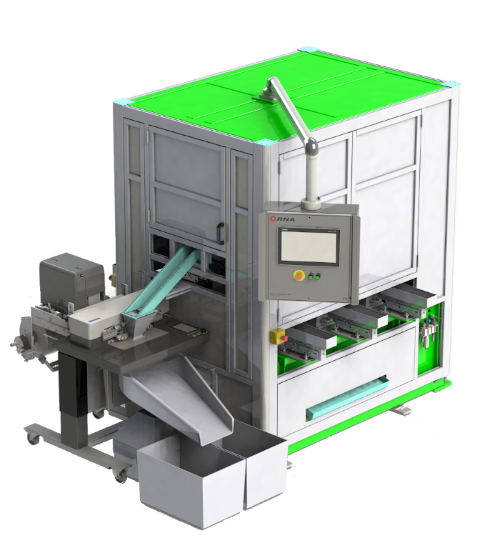
These machines are perfect for industries that need versatility, like electronics, pharmaceuticals, plastic molded parts or small mechanical parts.
How Does a Flexible Automatic Packaging Machine Work?
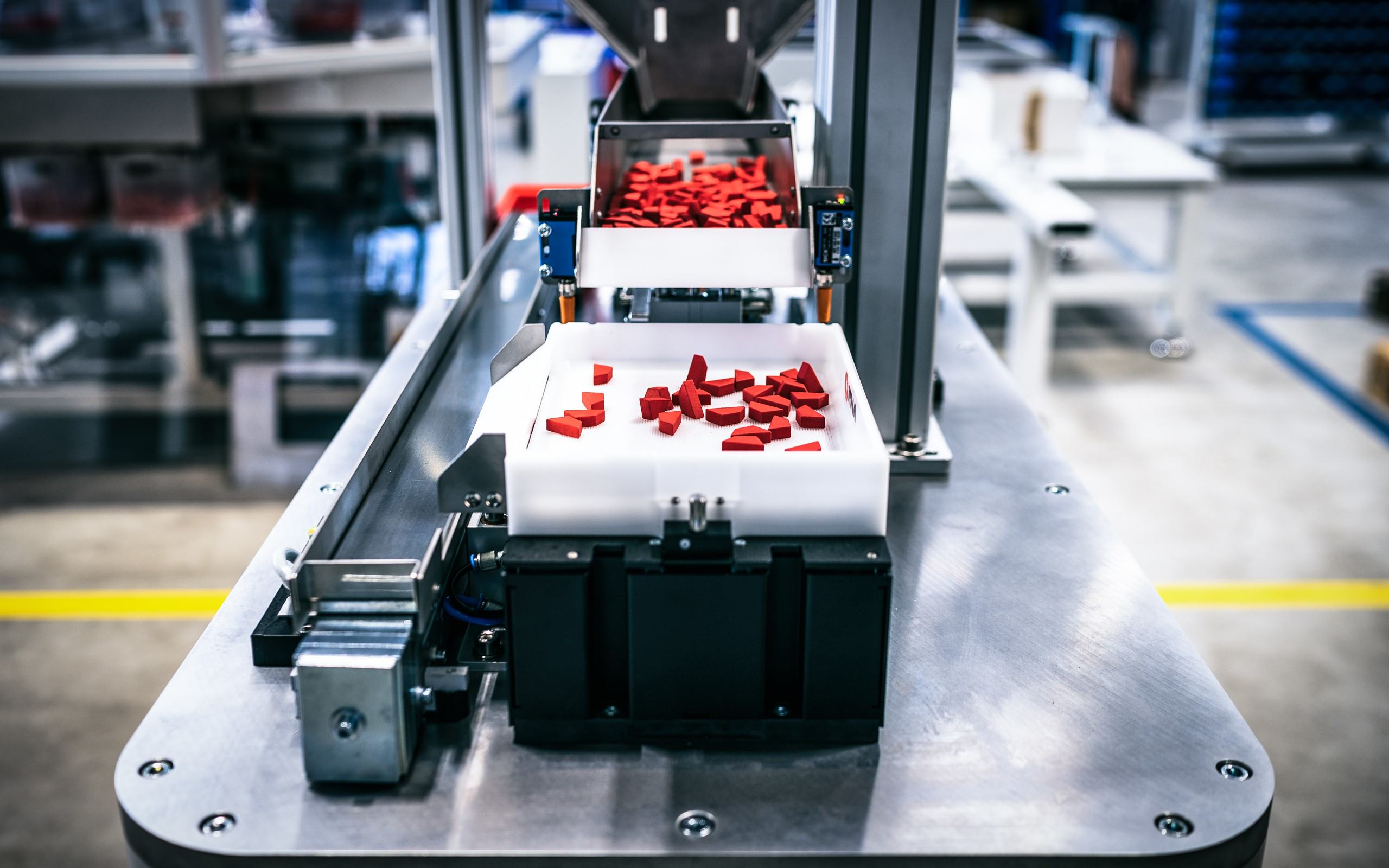
A flexible automatic packaging or bagging system brings several processes together within one automated solution. Components are presented by a feeding system, identified by machine vision, picked by a robot and transferred into a bag before sealing and discharge.
Here’s a step-by-step breakdown process:
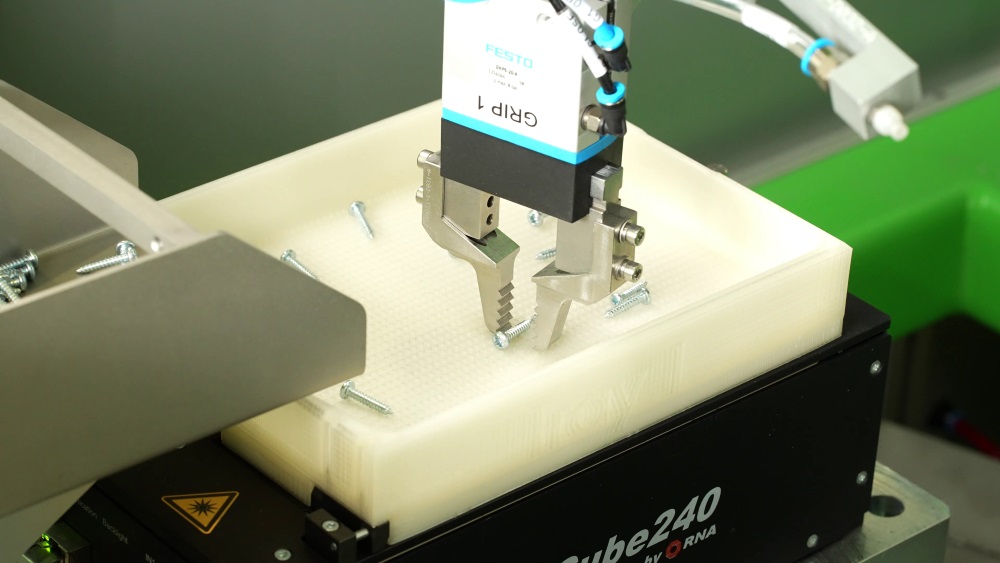
An integrated machine vision system identifies each component and determines its position and orientation. The vision system sends this information to the robot, allowing suitable parts to be selected even when they are randomly presented on the feeder surface.
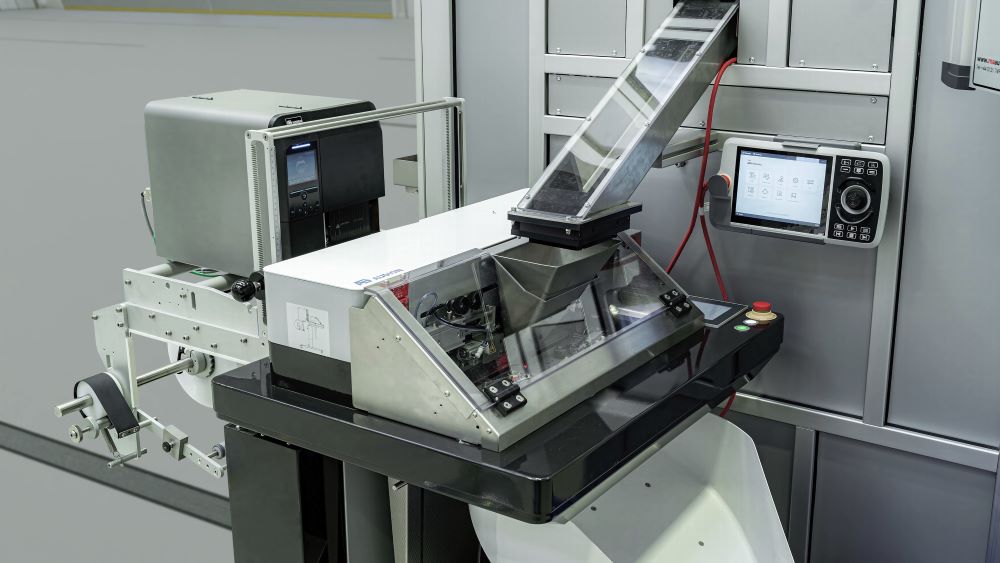
✅ In some systems, a bag opening mechanism uses support plates and cylinders to keep the bag open during filling, preventing material spillage.

✅ This automated approach:
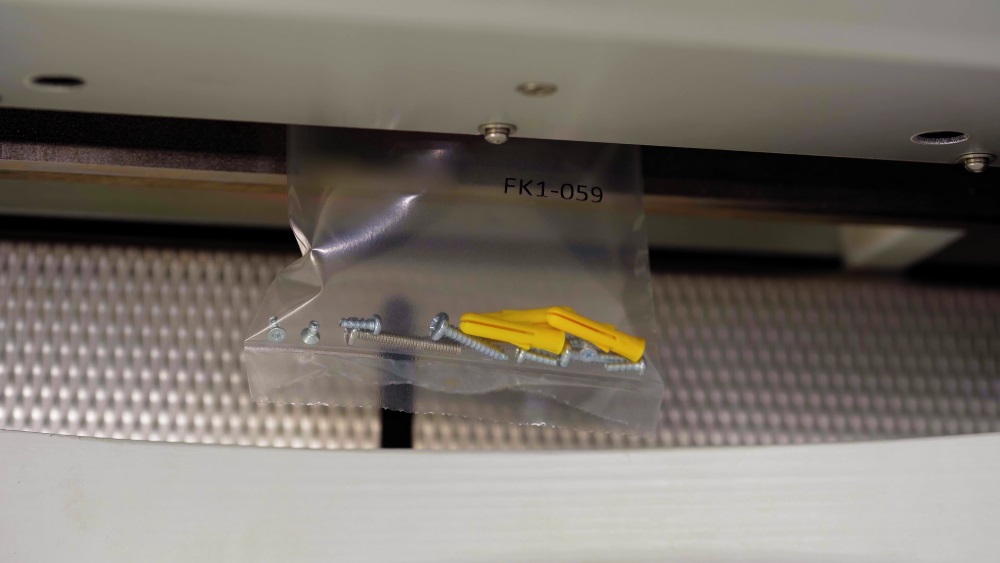
✅ Sealing methods include:
Core Technologies Inside a Flexible Packaging Machine
Why Use a Flexible Automatic Packaging Machine?
What Products Can Be Automatically Bagged?
Flexible automatic packaging machine can be used for a wide range of discrete manufactured components.
- Industrial Components & Fasteners: Screws, nuts, bolts, washers, hinges, and hardware kits.
- Medical Devices & Pharmaceuticals: Syringes, surgical fittings, valves, and fluid connectors.
- Plastics & Injection Molding: Molded parts, plastic caps, fasteners, and custom enclosures.
- Electronics & Electrical: Sensors, micro-connectors, wiring harnesses, and PCB components.
Automatic Packaging Machines for Small Parts
Small parts create particular challenges for automated packaging. Components may overlap, become entangled, arrive in random orientations or be difficult to separate reliably before packaging.
A flexible automatic bagging machine for small parts addresses these challenges by separating product presentation from product recognition.
The flexible feeder presents components across a controlled surface, machine vision identifies suitable parts, and the robot picks them individually before placing them into the bag. This makes the process less dependent on dedicated mechanical orientation tooling.
For manufacturers producing multiple component variants, this approach can also provide greater flexibility when products or production requirements change.
Why Choose RNA Flexible Automatic Packaging Systems?
RNA Automation develops feeding and handling systems for applications requiring reliable component presentation, orientation and transfer.
Our flexible packaging solutions combine technologies such as flexible feeders, machine vision, robotic pick and place and automatic bagging equipment to create an integrated process tailored to the component and production requirement.
The FlexType™ P Pack platform is designed for flexible component feeding and automated packaging applications, helping manufacturers automate the handling and bagging of small parts while accommodating product variation.
From initial component assessment and feeding trials through system design and integration, RNA engineers evaluate the complete handling process to determine the most appropriate feeding, vision, robotic and packaging solution.
Also available in:
 English
Last edited on: September 14, 2026
