Do you have any questions or need any technical advice?
Free free to contact us and we’ll be happy to help.
Scroll
Originally posted on: September 19, 2024
Poka-Yoke in Bowl Feeder Systems
Author: Chris Mills

In automated manufacturing, a single incorrectly oriented component can cause assembly errors, machine jams or production downtime. Poka-yoke in bowl feeder systems helps prevent these problems by identifying and rejecting incorrectly positioned parts before they reach the next production stage.
By combining mechanical guides, orientation tooling, sensors and rejection mechanisms, vibratory bowl feeders can deliver components in the correct orientation for reliable downstream assembly.
What Is Poka-Yoke in Bowl Feeder Systems?
Poka-yoke, a Japanese term meaning mistake-proofing, is an engineering approach designed to prevent errors or detect them before they affect production.
In vibratory bowl feeder systems, poka-yoke devices are integrated into the feeding track to control part orientation and prevent incorrectly positioned components from reaching downstream equipment.
These mechanisms are particularly important when handling components with complex geometries, similar-looking features or strict orientation requirements.
How Does Poka-Yoke Work in Vibratory Bowl Feeders?
A vibratory bowl feeder uses controlled vibration to move bulk components along a spiral track. As parts travel through the bowl, mechanical tooling guides them toward the required orientation.
However, variations in component geometry, surface condition or feeding behavior can allow incorrectly oriented parts to advance.
Bowl feeder mistake-proofing introduces additional checks along the feeding path. Components that meet the required orientation criteria continue toward the discharge, while incorrectly positioned parts are rejected or returned to the bowl for recirculation.
The objective is to prevent orientation errors from reaching downstream assembly operations without unnecessarily interrupting the feeding process.
RNA Solutions
Common Poka-Yoke Devices in Bowl Feeder Systems
1. Mechanical Guides and Orientation Tracks
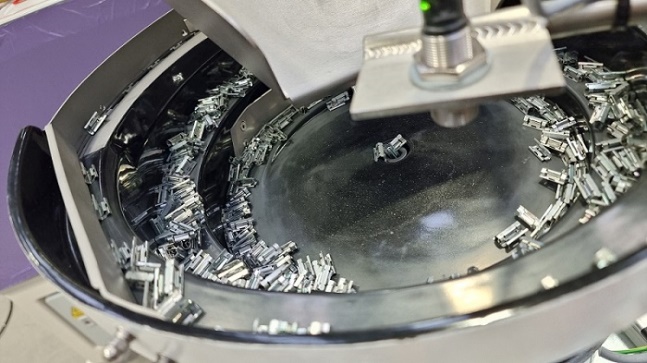
Mechanical poka-yoke devices use the physical geometry of components to distinguish between correct and incorrect orientations. Specially designed tracks, rails, barriers and profile checks allow correctly oriented parts to pass while rejecting those that do not meet the required conditions.
Application example – Automotive fasteners
For automotive fastener feeding, RNA has used mechanical barriers to verify component orientation. Incorrectly positioned fasteners are redirected into the bowl for recirculation, reducing the risk of assembly errors and feeder jams.
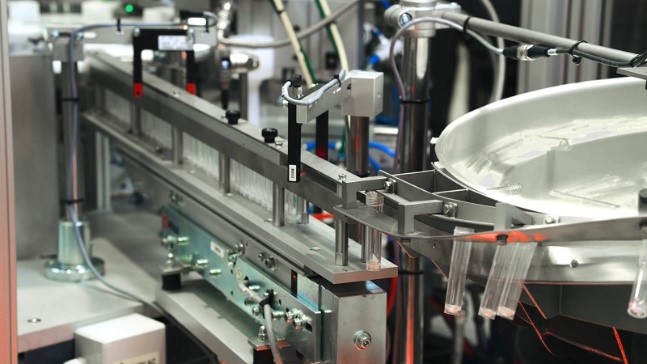
Application example – Pharma packaging
A pharma packaging company required a bowl feeder system to handle large volumes of vials into packaging line, where they are filled, capped, and assembled. To prevent errors during this process, we implemented a poka-yoke system with custom feeding track designed specifically for the shape of the vials. This track allows vials to pass if they are correctly oriented. If a vial is incorrectly oriented, it is automatically rejected and recirculated until it is correctly positioned. This ensures that all vials are ready for the filling process.
2. Sensors and Orientation Detection

Some component features cannot be reliably distinguished using mechanical tooling alone. Optical sensors, color sensors and machine vision can provide additional part orientation detection by identifying differences in component position, appearance or geometry. When an incorrectly oriented part is detected, the system can activate a rejection mechanism or prevent the component from advancing.
Application example – Automotive seals
RNA developed a bowl feeder incorporating an orientation sensor to detect incorrectly positioned automotive seals. The poka-yoke device prevents unsuitable orientations from leaving the feeding system.
3. Physical Stoppers and Pneumatic Rejection
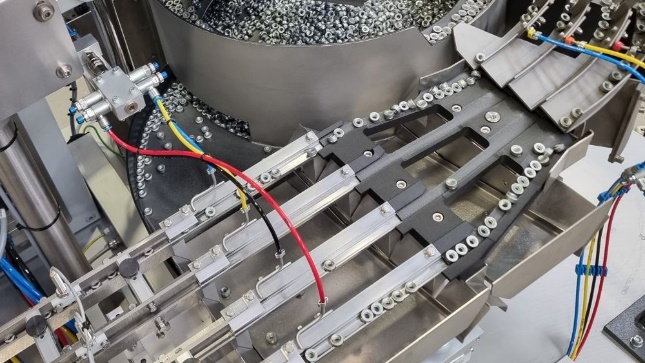
Physical stoppers and ejectors provide another method of preventing incorrectly oriented parts from progressing. Mechanical stops can restrict passage based on component geometry, while pneumatic air jets can reject unsuitable parts from the feeding track.
Application example – Industrial nuts
RNA incorporated multi-lane feeding and pneumatic air jets into a bowl feeder for an industrial fastener manufacturer. Correctly oriented nuts progressed through the feeding lanes, while misaligned components were returned to the bowl.
4. Error-Proofing Through Component Design
Poka-yoke principles can also be incorporated into component design.
Features such as asymmetric profiles, locating surfaces or distinctive geometric characteristics can make incorrect positioning easier to detect or physically prevent.
Where component design cannot be changed, the bowl feeder tooling must provide the necessary orientation control.
Why Is Part Orientation Important in Automated Feeding?
Consistent feed rate does not necessarily guarantee consistent part orientation.
A bowl feeder may deliver components at the required speed while occasionally allowing incorrectly oriented parts to pass. These errors can cause assembly failures, rejected products or interruptions further along the production line.
Effective bowl feeder orientation control therefore requires both reliable component movement and suitable verification or rejection mechanisms.
Poka-yoke provides an additional level of protection by preventing incorrectly oriented parts from leaving the feeding system.
Benefits of Poka-Yoke in Bowl Feeder Design
Integrating mistake-proofing mechanisms into a vibratory bowl feeder can provide several operational benefits:
- Reduced assembly errors: Prevents incorrectly oriented components from reaching downstream operations.
- Improved feeding reliability: Reduces disruption caused by unsuitable component orientations.
- Less manual intervention: Minimizes the need for operators to identify and correct orientation errors.
- Reduced waste and rework: Helps prevent defects associated with incorrect component presentation.
- Improved production efficiency: Supports more consistent operation by reducing orientation-related stoppages.
Poka-Yoke Applications Across Manufacturing Industries
Poka-yoke devices are used in bowl feeder systems across industries where consistent component orientation is essential.
● Automotive: Feeding and orienting fasteners, seals, clips and other components before automated assembly.
● Pharmaceutical and Medical Devices: Controlling the orientation of vials and precision components before filling, assembly or packaging.
● Industrial Fasteners: Separating and orienting nuts, bolts and other fasteners using mechanical tooling and rejection mechanisms.
● Plastics and Electronics: Handling molded components and small parts with geometric features that require controlled orientation.
How to Improve Bowl Feeder Orientation Accuracy
Effective mistake-proofing begins with understanding the component and its behavior during feeding.
Engineers should consider:
- Component geometry: Which features distinguish correct and incorrect orientations?
- Mechanical tooling: Can incorrect orientations be rejected using guides, rails or profile checks?
- Sensor requirements: Are additional checks needed to detect subtle orientation differences?
- Rejection and recirculation: How will incorrectly oriented components be removed without disrupting feeding?
- Production requirements: Can the system maintain the required output while consistently rejecting unsuitable parts?
Testing components under representative operating conditions helps identify potential orientation failures before the feeding system enters production.
Engineering Reliable Bowl Feeder Systems with RNA Automation
RNA Automation designs and manufactures vibratory bowl feeder systems with integrated orientation and mistake-proofing features for demanding manufacturing applications.
Our engineering approach considers component geometry, feeding behavior, orientation requirements and downstream processes to develop reliable feeding solutions.
By combining mechanical tooling, sensors and appropriate rejection mechanisms, RNA helps manufacturers reduce orientation-related errors and improve automated feeding performance.
📩 Need to Improve Part Orientation in Your Feeding System?
Incorrect part orientation can lead to repeated stoppages, assembly errors and unnecessary production losses.
Contact RNA to discuss your component feeding challenges and explore how poka-yoke and bowl feeder orientation tooling could improve your production process.
Also available in:
 English
Last edited on: October 13, 2026
