Scroll

Digital Bowl Feeders

Digitally validated, AI-optimized bowl feeders designed for reproducible, high-performance feeding.

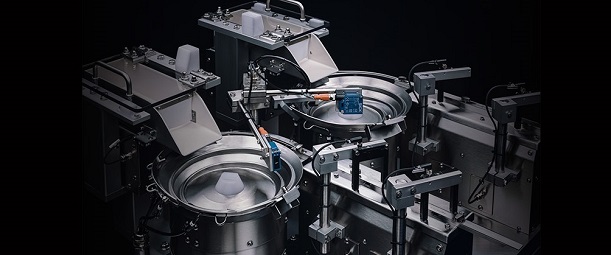
RNA’s Digital Bowl Feeders represent the next generation of feeding technology — a truly unique innovation on a global scale. Using AI and 3D Geometric Deep Learning, RNA can create a digital twin of the feeding system, allowing it to be simulated, tested, and optimized virtually before the physical system is built.

Digital Bowl Feeder

Artificial Intelligence & Simulation

Apply AI and simulation tools throughout project engineering and CAD

Leverage digital technologies to improve design quality and competitiveness

Unlike conventional bowl feeders—where behaviour is finalized through physical trial-and-error during commissioning — a Digital Bowl Feeder is engineered using a digital twin approach. Both the feeding concept and the vibration behaviour are defined digitally in advance, resulting in a system that is more predictable, easier to commission, and easier to reproduce.

Digital Bowl Feeder: What is it?


A Digital Bowl Feeder is a vibratory bowl feeder that has been designed, validated, and tuned using digital simulation before it is built.

Before any hardware is manufactured, the sorting solution is tested, verified, and approved using Digital Feeder™ simulation. Even at an early concept stage, this allows RNA to determine whether a component can be fed reliably, providing confidence that the final solution will perform as intended in real operation and can be reproduced consistently across builds.

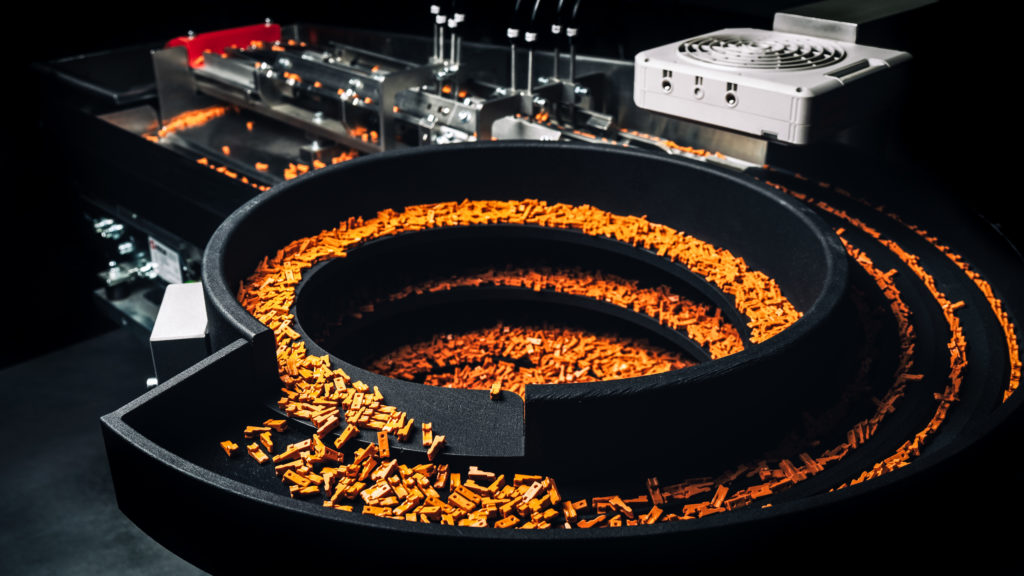
Many RNA bowl feeders are already digitized and can be tailored precisely to the application. The RNA Digital Bowl Feeder features a sorting track (custom tooling specific to the material), which can be CNC-milled or 3D-printed. This tooling is developed after detailed simulation and assessment of the bulk material.


How accurate is your simulation

Using multiphysics simulation combined with 3D Deep Learning AI, the optimal tooling geometry is calculated with high precision. This ensures close alignment between the digital simulation of the feeding process and the actual, reproducible behaviour of the components in operation, resulting in stable, predictable transfer from bulk material to the linear outfeed.

RNA’s digital capabilities are applied not only to advanced systems, but also to conventional feeding technologies — combining proven mechanical design with modern digital intelligence to deliver reliable, reproducible bowl feeder solutions.

• simulated before being built
• digitally reproducible
• designed with AI & 3D Deep Learning
• equipped with CNC-milled or 3D-printed tooling, and
• delivered as a complete, real physical system.

3D Machined Bowl Feeder1

Digital Bowl Feeders with 3D Machined Bowls

RNA 3D machined bowl feeders are custom-designed and manufactured using advanced 3D machining techniques. RNA focuses on the CAD/CAM-supported production of polyamide and aluminium bowl feeders for very small and small parts. With RNA digital solutions, all 3D machined bowl feeders can be reproduced and fully simulated.

3D Printed Bowl

Digital Bowl Feeders with 3D Printed Bowls

RNA 3D printed bowl feeders are designed and produced using additive manufacturing techniques, allowing for rapid customisation and full reproducibility. They are flexible and can be quickly changed over for different part shapes and sizes, making them ideal for industries that require high flexibility, such as electronics and small parts manufacturing.

Digital Bowl Feeders

How does it work?

Digital Solutions complement RNA engineering
Concept • Feasibility • Digital Validation • Design for Manufacturing

System Delivery
Motion Tuning • Build • Commissioning • Lifecycle

01

;

02

;

03

;

04

;

05

;

06

;

07

;

Project Inputs & Analysis

Digital Solution & Feasibility

Mechanical Design & Optimisation

Digital Solution & Validation

Digital Motion

Build & Commission

Operation & Lifecycle

» Part CAD & requirements

» Orientation & output

» Constraints & environment

» Feeder type selection

» Sorting concept

» System-level simulation

» Feasibility validation

» Final bowl & track design

» Tooling definition

» Layout finalised

» Track & tooling geometry

» Validation & Commissioning

» Feed rate validation

» Drive & vibration simulation

» Spring & frequency tuning

» Optimise running parameters

» CNC or 3D-print the bowl selection & tooling

» Physical system build

» Reduced on-site tuning

» Predictable behaviour

» Reproducible systems

» Service & relining

» Change tooling

» Digital documentation reuse

Why Choose a Digital Bowl Feeder?

Digitally Validated Before Production
Digital Bowl Feeders are simulated and tested virtually before manufacture, allowing feeding concepts to be verified in advance. This digital pre-testing reduces reliance on physical prototypes, lowers project risk, and ensures the solution performs as expected from the outset.
Reproducible & Consistent Performance
CNC-milled and 3D-printed tooling enables a highly reproducible bowl feeder design, ensuring consistent quality, geometry, and performance across multiple builds. Digital data allows systems to be replicated reliably across production lines or sites.
AI-Optimized Sorting Geometry
Using Artificial Intelligence and 3D Geometric Deep Learning, sorting tracks and tooling are optimized digitally to maximize feeding efficiency and stability. Complex geometries that are difficult or impossible to achieve with conventional methods can be precisely calculated and manufactured.
High Precision Manufacturing
Advanced CNC machining and additive manufacturing deliver:

• High accuracy and tight tolerances
• Smooth, consistent surface finishes
• Precise alignment between digital design and physical hardware

This precision directly supports stable, repeatable feeding behaviour.

Flexibility for Part Variants & Materials
Digital Bowl Feeders can be adapted efficiently for different materials or part variants, making them well suited for:

• Part families
• Design updates
• Future product changes

Digital tooling data simplifies changeovers and reduces re-engineering effort.

High Performance & Reliability
By combining digital validation with proven RNA mechanical design, Digital Bowl Feeders deliver stable, reliable feeding performance, supporting demanding requirements for precision, throughput, and long-term operation.
Shorter Lead Times & Cost Efficiency
Digital design and manufacturing reduce:

• Development time
• Material waste
• Iterative rework

This enables shorter lead times and more cost-effective production, particularly for complex or customized bowl feeder designs.

Digital Solutions Behind Every Digital Bowl Feeder

Every Digital Bowl Feeder is supported by RNA’s proven digital simulation tools, which enable predictable, reproducible system behaviour from concept through to operation.

Digital Feeder™ – System-Level Simulation

Digital Motion™ – Drive & Vibration Behaviour

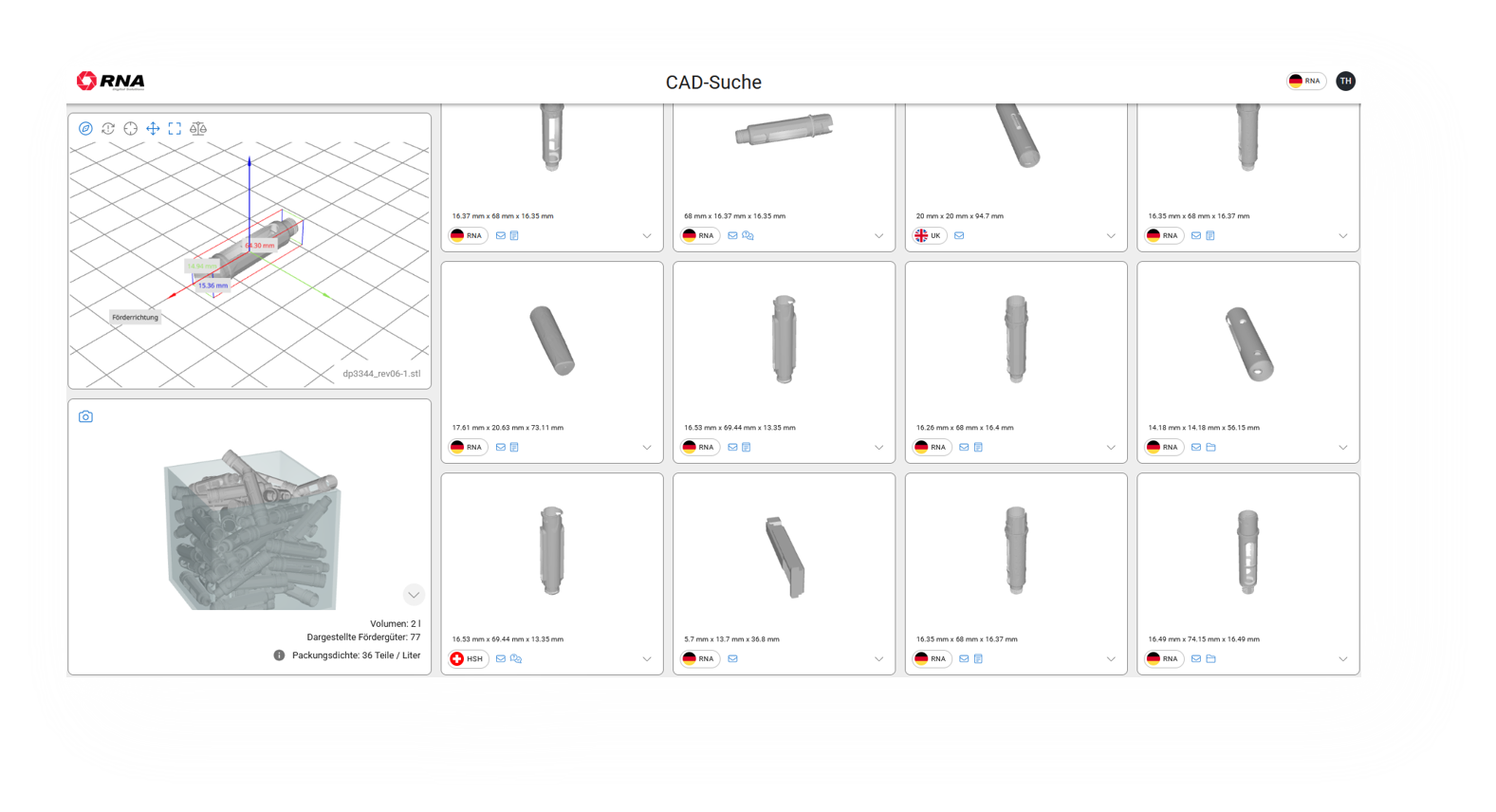
Upload CAD-Model of customer

• Determination of preferred position

• Feasibility study (performance parameters (parts/min.), recommended system concept, rough system layout with dimensions)

• First risk evaluation

RNA-internal solution finding

• AI-based identification of references through access to over 50 years of feeding system technology expertise

• Automated hopper simulation

• Automated evaluation of preferred position

• System design development

Sorting concept detailing

• Semi-automatic sorting concept creation

• Risk assessment

• Effort assessment

• Semi-automatic design derivation

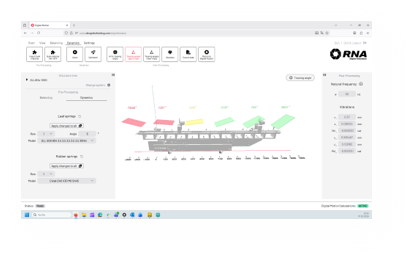
Digital tuning of drive units

• All RNA drives can bedigitally tuned via our web platform - for you too!

• Optimal balancing and ideal drive design right from the design phase

• No trial and error in production

Digital twin in feeding systems tech.

• 100% reproducibility

• Testing the function of alternative workpieces

• Digital performance assessment

• Separation process

• Accumulationbehaviour

• Parts locking & stress test

Part of RNA’s Digital Feeding Systems

Digital Bowl Feeders are a key element of Digital Feeding Systems by RNA Automation—a portfolio of feeding solutions that are digitally engineered, validated, and optimized before build.

Digital Feeding Systems are available across RNA’s feeding technologies, including:

• Vibratory bowl feeders
• Linear feeders
• Step feeders
• Centrifugal feeders
• Integrated feeding and handling systems

By combining proven mechanical design with advanced digital simulation, RNA Digital Feeding Systems help customers:

• Reduce project risk
• Shorten commissioning time
• Improve repeatability across lines and sites
• Support long-term lifecycle performance

From vibratory bowl feeders to complete feeding and handling systems, RNA applies digital engineering to deliver reliable, production-ready solutions.

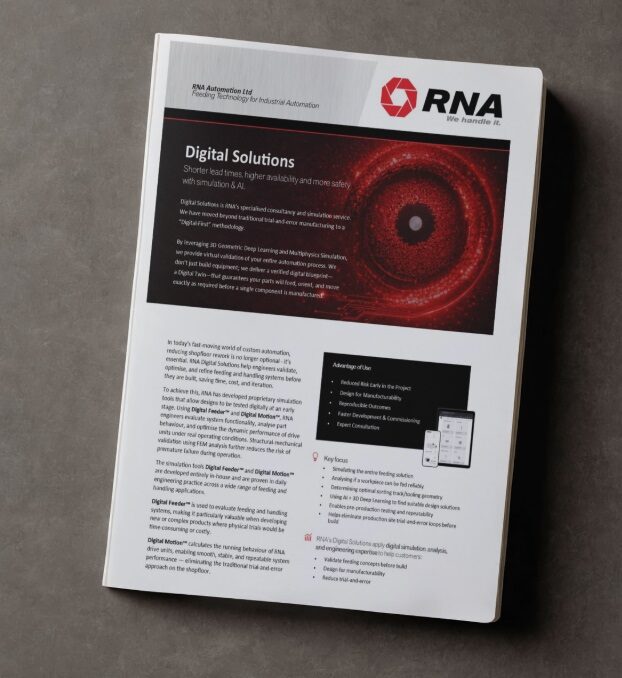
If you are looking to reduce risk, shorten commissioning time, or standardize feeding solutions across your production lines, speak to RNA Automation about Digital Feeding Systems.
Email: [email protected] Website: www.rnaautomation.com

Applications

3D printed digital bowl feeders for Filigree parts from the electronics industry

3D Printed Bowl Feeder for Pushers

3D Printed Bowl Feeder for Filigree Parts from the Electrical Industry

Read More
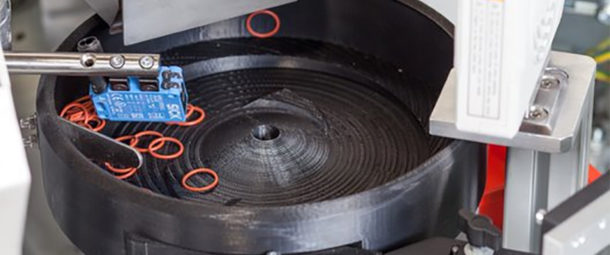
3D printed digital bowl feeders handle red O-rings.

3D Printed Bowl Feeder for O Rings

3D printed vibratory bowl feeders handling O-rings. A nylon material with an anti-static additive is used for the bowl.

Read More
Digital Bowl Feeders for screws feeding for the furniture industry.

Vibratory Bowl Feeder Batch Feeding for Screws

A standardised screw feeding system for the furniture industry.

Read More
×

Watch

Industrial Automation Solutions

Digital Feeding Systems

Digital Bowl Feeders

Also available in: English

Digital Bowl Feeders

Also available in: English

Contact

Send your message to a member of our team

"*" indicates required fields

This field is for validation purposes and should be left unchanged.
Would like to receive our quarterly newsletter?

Read our Privacy Policy to learn how we manage and protect your submitted information.

Contact us